top of page

FEATURED EXPERTS AND INTERVIEWEES DOING CRITICAL WORK AROUND RETHINKING THE CURRENT AMERICAN ECONOMIC STRUCTURE

​

Gar Alperovitz, political economist and historian and author of Unjust Desserts and American Beyond Capitalism, points to the remarkable growth of co-ops and worker-owned companies. “This is not an election, this is not a revolution, it’s the long rebuilding of the entire basis of a system and that’s a hard thing for people to grasp. Evolutionary reconstruction…building from the bottom, challenging from the top.”

​

​

Deepak Bhargava, Executive Director of the Center for Community Change, a national nonprofit organization whose mission is to develop the power and capacity of low-income people, especially low-income people of color, to change the policies and institutions that affect their lives. “This country is working for the richest people and the elites and nobody else.”

​​

​

Alan Stuart Blinder is a Professor of Economics and Public Affairs at Princeton University. Since 1978 he has been Research Associate of the National Bureau of Economic Research. He is among the most influential economists in the world according to IDEAS/RePEc, and is “considered one of the great economic minds of his generation.” Blinder served on President Bill Clinton’s Council of Economic Advisors (Jan 1993 – June 1994), and as the Vice Chairman of the Board of Governors of the Federal Reserve System from June 1994 to January 1996. Blinder’s recent academic work has focused particularly on monetary policy and central banking, as well as the “offshoring” of jobs, and his writing for lay audiences has been published in The New York Times, Washington Post and Wall Street Journal.

​

​

David Brock is the author of four political books, including The Republican Noise Machine: Right-Wing Media and How It Corrupts Democracy (Crown, May 2004). In his preceding book, Blinded by the Right: The Conscience of an Ex-Conservative (Crown, March 2002), a 2002 New York Times best-selling political memoir, he chronicled his years as a conservative media insider. Brock was the recipient of the New Democrat Network’s first award for political entrepreneurship. He currently serves on the board of Progressive States Network, an organization created to support progressive state legislators. He is the CEO of Media Matters for America.


Robert Lloyd “Bob” Crandall is the former president and chairman of American Airlines. Called an industry legend by airline industry observers, Crandall has been the subject of several books and is a member of the Hall of Honor of the Conrad Hilton College. He received an MBA from the Wharton School of the University of Pennsylvania, and an undergraduate degree from the University of Rhode Island. Before the passing of the 1978 Airline Deregulation Act, Crandall was one of the act’s loudest opponents. In 1985, Crandall succeeded Albert Casey as American’s chairman and CEO. During the latter period of Crandall’s tenure as CEO, investor concern over airline bankruptcies and falling stock prices caused Crandall to remind his employees about the dangers of investing in airline stocks. Known for his candor, Crandall later told an interviewer, “I’ve never invested in any airline. I’m an airline manager. I don’t invest in airlines. And I always said to the employees of American, ‘This is not an appropriate investment. It’s a great place to work and it’s a great company that does important work. But airlines are not an investment.'” Crandall noted that since the airline deregulation of the 1970s, some 150 airlines had gone out of business. “A lot of people came into the airline business. Most of them promptly exited, minus their money,” he said. He advocates an industrial policy demanding that companies receiving taxpayer bailouts begin making high-speed rail networks and electric vehicles in exchange. “Our standard of living and way of life is at risk. It’s scaring the hell out of everybody and everybody should be scared.” “Regulation prevents the free market from behaving in a way that is contrary to the common good.” “Every man for himself is NOT civilization. Taxes are the price of civilization.” “We’re eviscerating our manufacturing ability all in the name of lower prices, free trade, the market knows best……the market doesn’t know best.” “No one needs to make $500 million a year and no one is entitled to.”

​

​

Donna F. Edwards is the U.S. Representative for Maryland’s 4th congressional district, serving since a special election in 2008.  A lawyer and long time community activist, she defeated 15-year incumbent Albert Wynn in the 2008 Democratic primary and won a special election to fill the remainder of his term.  She was officially sworn in two days later, becoming the first African American woman to represent Maryland in the United States Congress.  She is working to help pass an amendment to the U.S. Constitution that would effect a repeal of the 2010 Supreme Court ruling in Citizens United v. Federal Election Commission.  Edwards earned her first degree from Wake Forest University, where she was one of only six black women in her class. After working for Lockheed Corporation at the Goddard Space Flight Center with the Spacelab she attended and earned a law degree from Franklin Pierce Law Center in New Hampshire.  “This has been the biggest wealth transfer in the history or America or mankind.”

​

​

Jeff Faux, founding president and distinguished fellow of the Economic Policy Institute and author of The Global Class War, talks about the need to revitalize government. “How rotten underneath the U.S. economy has become. “We need to make public service something that’s respected, that’s paid decently, that people can look up to, because those are the people who are going to have to get us out of here, not just in the next six months, but over the next 20, 30 years.” “Much of what happened, happened in the 8 years of Bill Clinton.”

​

​

Leo W. Gerard is the International President of the United Steel, Paper and Forestry, Rubber, Manufacturing, Energy, Allied Industrial and Service Workers International Union, AFL-CIO, CLC. The U.S.W is the dominant union in paper, forestry products, steel, aluminum, tire and rubber, glass, chemicals, and petroleum. “We’ve seen the acceleration of the hollowing out of America as the most important and powerful industrial society on earth.”

​

​

Jakada Imani is working to help bring an end to the cycle of violence that plagues much of urban America and promote reinvestment in our cities using smart solutions and uplifting alternatives to violence and incarceration. A long-time community activist, Jakada became the Ella Baker Center’s Executive Director in 2007, after serving as a lead strategist and chief team member on some of their most high profile campaigns.  Before joining the Ella Baker Center he helped launch or lead a number of important Bay Area organizations, including Empowered Youth Educating Society (EYES).  Born and raised in Oakland, California, Jakada is the father of four powerful and creative young girls. You can read his articles in Ella’s Voice as well as follow his contributions to City Brights and Huffington Post. “The folks who ran the economy ran a red light and caused car wrecks and no one’s held accountable, not even a conversation about it.” “The American Dream is when people get to live up to their full potential. You have to recast what that means now. It’s not 2.5 kids, a white picket fence, with an SUV in the driveway. It’s a much more inclusive dream to make a life in this country. An opportunity to reframe the American Dream.”

​

​

David Cay Johnston is the Pulitzer Prize-winning reporter for The New York Times who revealed that Enron did not pay taxes, that some companies use a Bermuda mail box to escape American taxes and that Congress raises your income taxes if you get seriously ill, using the money to finance tax cuts for the richest Americans. He retired from The Times in April 2008 after 13 years there. His acclaimed book Free Lunch, is a national bestseller exposing the massive transfers of wealth from the poor, middle class and affluent to the super rich. He is also the author of Perfectly Legal: The Covert Campaign to Rig Our Tax System to Benefit the Super Rich and Cheat Everyone Else, a national best seller on our tax system that won the 2004 Investigative Book of the Year award. His first book was Temples of Chance, an expose of the casino industry. He began his journalism career at The San Jose Mercury News. He covered student radicals, land use and local governments from 1968 to 1973. Born in San Francisco on December 24, 1948, Mr. Johnston studied economics and law at the University of Chicago in 1973. He also studied at Michigan State and San Francisco State University in 1972 and 1973 to 1975. “Twenty years ago, journalists would call people on lies, but today you’ll be fired. We don’t ask the tough questions now.” “The 401K is a subtle kind of pay cut. You have to save money out of your paycheck (so you have less money), even with a match, it saves a company 50% or more in the plan the employee manages his own pension investment so assumes all the risk. The average person doesn’t know how to do this.”

​

​

Van Jones is the Co-Founder and President of Rebuild the Dream. Van is also a Senior Fellow at the Center for American Progress, and American Progress Action Fund. He is focusing on “green-collar jobs” and how cities are implementing job-creating climate solutions. Van Jones is a globally recognized, award-winning pioneer in human rights and the clean energy economy. He is a co-founder of three successful nonprofit organizations: the Ella Baker Center for Human Rights, Color of Change, and Green For All. He is also the best-selling author of the definitive book on green jobs, The Green Collar Economy. Jones served as the green jobs advisor in the Obama White House in 2009 and is currently a senior policy advisor at Green For All. He also holds a joint appointment at Princeton University as a distinguished visiting fellow in both the Center for African American Studies and in the Program in Science, Technology and Environmental Policy at the Woodrow Wilson School of Public and International Affairs. “It’s a major challenge to retrofit a nation- repower a nation—it’s never been done and requires WWII level of mobilization.” We can bail out the people AND the planet.” “What kind of species are we? Are we locusts or are we honeybees? Both work hard but one is a blessing. Our challenge is to be honeybees.”

​

​

Robert Kuttner is a founding co-editor of The American Prospect and a contributing columnist to Business Week’s “Economic Viewpoint.” His editorial column on political economy originates in the Boston Globe, and is syndicated nationally by The Washington Post to about twenty major daily papers. His commentaries are heard on National Public Radio and he regularly appears on TV programs such as the “NewsHour with Jim Lehrer.” Previously, Kuttner was the longtime economics editor of The New Republic and taught at Brandeis, Boston University, the University of Massachusetts, and Harvard University’s Institute of Politics. He was a founder of the Economic Policy Institute, and serves on its board. His other positions have included national staff writer on the Washington Post, chief investigator of the U.S. Senate Banking Committee, and economics editor of The New Republic. For four decades, Bob’s intellectual and political project has been to revive the politics and economics of harnessing capitalism to serve a broad public interest. He has pursued this ideal as a writer, editor, teacher, lecturer, commentator and public official. The Squandering of America, exploring the political roots of America’s narrowing prosperity and the systemic risks facing the U.S. economy, is Bob’s seventh book. “For 30 years, we’ve been turning up the heat on average Americans so slowly that when you say this is a crisis, people look at you as if you’re weird.” “Greenspan got out just in time before the crash. His policy of deregulating everything, financing speculation with cheap money, will look a lot worse in the light of history.” “As soon as the casino goes bust, they want a government bail out. That’s not a free market. That’s socialism on the downside, capitalism on the upside.” “Resurgence of unions is important because of institutional counterweight to the power of Wall St.”

​

​

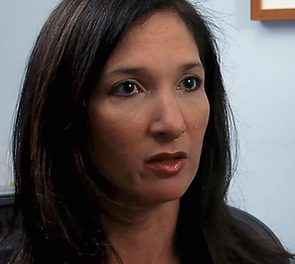
Kimber Lanning is an entrepreneur and economic specialist who works to cultivate vibrant, sustainable communities and inspire a higher quality of life throughout Arizona. Lanning is actively involved in fostering cultural diversity, economic self-reliance, regional planning, and responsible growth in the greater Phoenix area. She is the founder and Executive Director of Local First Arizona, a non-profit organization dedicated to raising public awareness of the positive economic and environmental impacts of supporting locally owned businesses. “When the majority of the American public can no longer feed their families, we’re going to have a crisis. That’s where we’re headed.”

​

​

Michael Lind is the Whitehead Senior Fellow at the New America Foundation. He is the author, with Ted Halstead, of The Radical Center: The Future of American Politics (Doubleday, 2001). He is also the author of Made in Texas: George W. Bush and the Southern Takeover of American Politics (New America Books/Basic, 2003) and What Lincoln Believed (Doubleday, 2005). Mr. Lind has been an editor or staff writer for The New Yorker, Harper’s Magazine, and The New Republic. From 1991 to 1994, he was executive editor of The National Interest. He has also been a guest lecturer at Harvard Law School. Mr. Lind has appeared on C-SPAN, National Public Radio, CNN and PBS. Mr. Lind’s first three books of political journalism and history, The Next American Nation: The New Nationalism and the Fourth American Revolution (Free Press, 1995), Up From Conservatism: Why the Right Is Wrong for America (Free Press, 1996), and Vietnam: The Necessary War (Free Press, 1999) were all selected as New York Times Notable Books. His groundbreaking study of American grand strategy, The American Way of Strategy: U.S. Foreign Policy and the American Way of Life was published by Oxford University Press in October 2006.

​

​

Nomi Prins is a journalist and Senior Fellow at Demos. Her latest book is: It Takes a Pillage: Behind the Bonuses, Bailouts, and Backroom Deals from Washington to Wall Street (Wiley, September, 2009). She is the author of Other People’s Money: The Corporate Mugging of America (The New Press, October 2004), a devastating exposé into corporate corruption, political collusion and Wall Street deception. Other People’s Money was chosen as a Best Book of 2004 by The Economist, Barron’s and The Library Journal.  Her book Jacked: How “Conservatives” are Picking your Pocket (whether you voted for them or not) (Polipoint Press, Sept. 2006) catalogs her travels around the USA; talking to people about their economic lives. Before becoming a journalist, Nomi worked on Wall Street as a managing director at Goldman Sachs, and running the international analytics group at Bear Stearns in London. Nomi has appeared in numerous television programs internationally and her writing has been featured in major news publications, including the New York Times, The Guardian UK, and The Nation.

​

​

Bernie Sanders was elected to the U.S. Senate in 2006 after serving 16 years in the House of Representatives. He is the longest serving independent member of Congress in American history. Born in Brooklyn, Bernie was the younger of two sons in a modest-income family. After graduation from the University of Chicago in 1964, he moved to Vermont. Early in his career, Sanders was director of the American People’s Historical Society. Elected Mayor of Burlington by 10 votes in 1981, he served four terms. Before his 1990 election as Vermont’s at-large member in Congress, Sanders lectured at the John F. Kennedy School of Government at Harvard and at Hamilton College in upstate New York. The Almanac of American Politics has called Sanders a “practical” and “successful legislator.” He has focused on the shrinking middle class and widening income gap in America that is greater than at any time since the Great Depression. Other priorities include reversing global warming, universal health care, and fair trade policies, supporting veterans and preserving family farms. He serves on five Senate committees: Budget; Veterans; Energy; Environment; and Health, Education, Labor and Pensions. “Who is going to jail for the misdeeds of Wall Street?” “This is class warfare.”

​

​

Elizabeth Warren American attorney, Harvard law professor, and United States Senate candidate in Massachusetts. She served as Assistant to the President and Special Advisor to the Secretary of the Treasury for the Consumer Financial Protection Bureau (CFPB). In the wake of the 2008-2011 financial crisis, she became the chair of the Congressional Oversight Panel created to oversee the U.S. banking bailout (formally known as the Troubled Assets Relief Program). She advocated for the creation of a new Consumer Financial Protection Bureau, which was established by the Dodd–Frank Wall Street Reform and Consumer Protection Act signed into law by President Barack Obama on July 21, 2010. As the special advisor she worked on implementation of the CFPB. “There is nobody in this country who got rich on his own. Nobody. You built a factory out there—good for you. But I want to be clear. You moved your goods to market on the roads the rest of us paid for. You hired workers that the rest of us paid to educate…Part of the underlying social contract is you take a hunk of that and pay forward for the next kid who comes along.”

​

​

Drew Westen, Ph.D. is a clinical, personality, and political psychologist and neuroscientist, and Professor in the Departments of Psychology and Psychiatry at Emory University. He formerly taught at the University of Michigan, Harvard Medical School, and Boston University. Dr. Westen is the author of three books and over 150 scholarly articles. He frequently comments on political and psychological issues on radio, television, and in print. He is the author of The Political Brain: The Role of Emotion in Deciding the Fate of the Nation, and is the founder of Westen Strategies, LLC, a strategic messaging consulting firm. He has advised a range of candidates and organizations, from presidential and congressional campaigns to major progressive organizations to the House and Senate Democratic Caucuses.

  • Threads
  • Youtube
  • Facebook
  • Instagram
  • Vimeo
bottom of page